
Huntington Beach, CA
Garage Door Repair for Huntington Beach Homes
Torsion springs and openers failing in Huntington Beach homes built 1953-1995. Here's what a real repair job involves, what drives cost, and why it happens here.
What we do
Garage door work in Huntington Beach
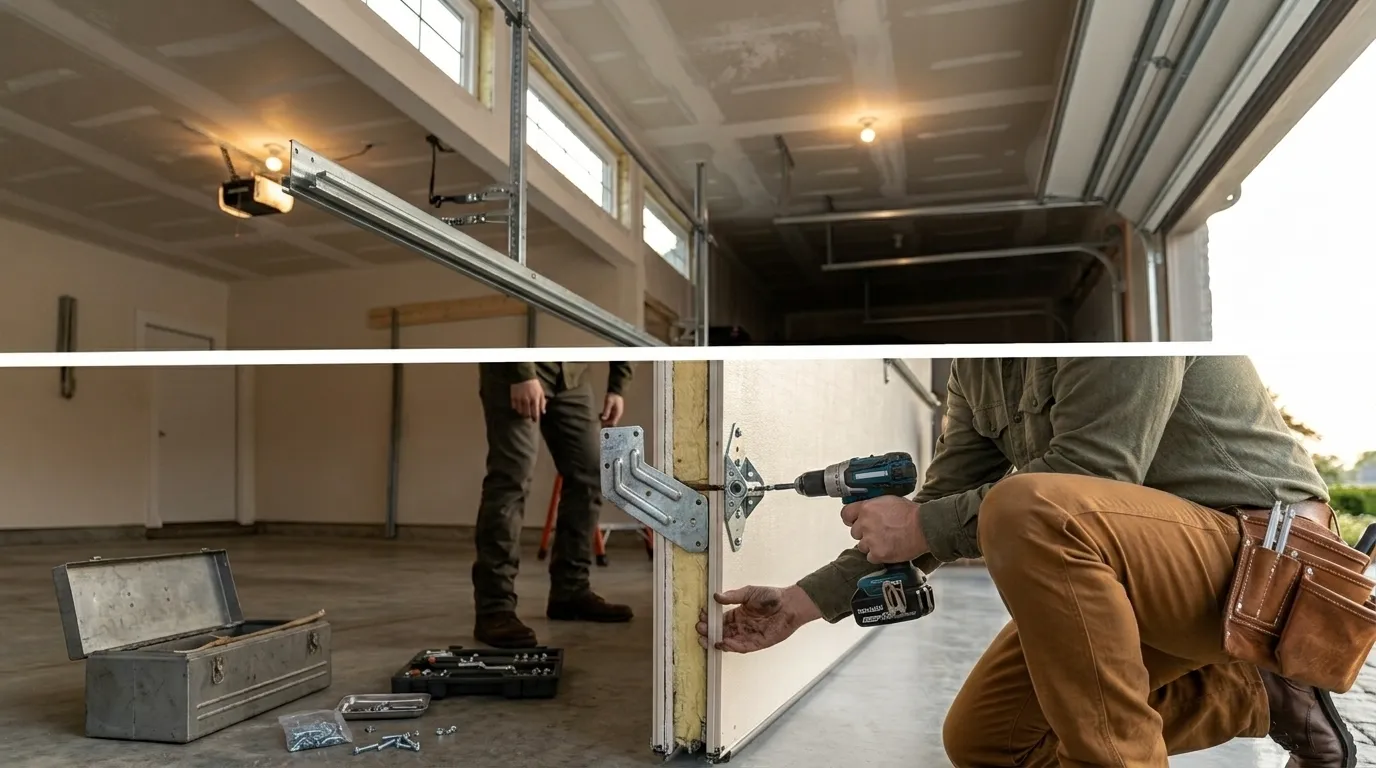
Garage Door Installation for Huntington Beach Homes
Homes here mostly date to the 1960s-70s, and original hardware doesn't match today's doors. Learn more →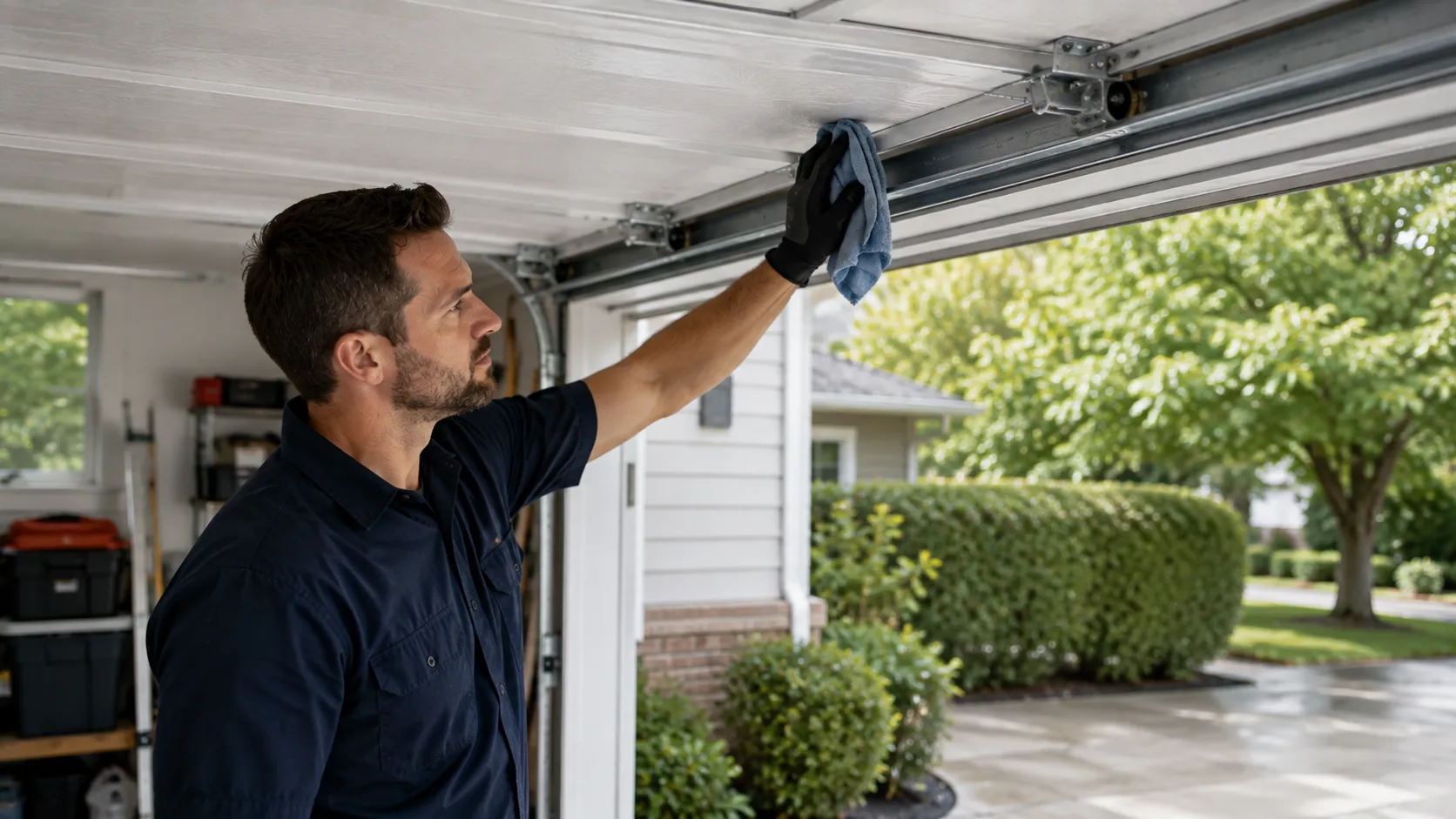
Garage Door Repair in Huntington Beach
Garage door repair in Huntington Beach, CA built for the city's 1960s-70s housing stock and mild climate. Learn more →Local detail
What the Repair Takes
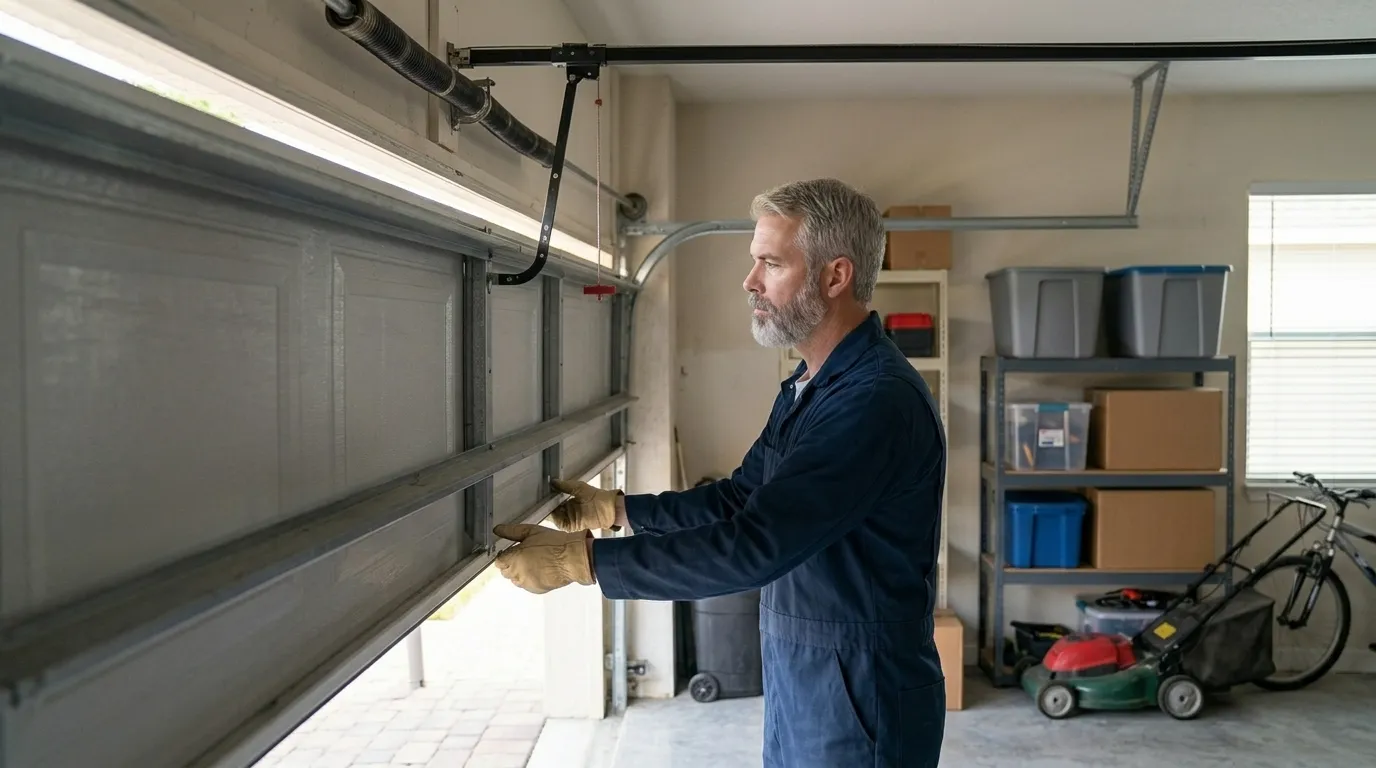
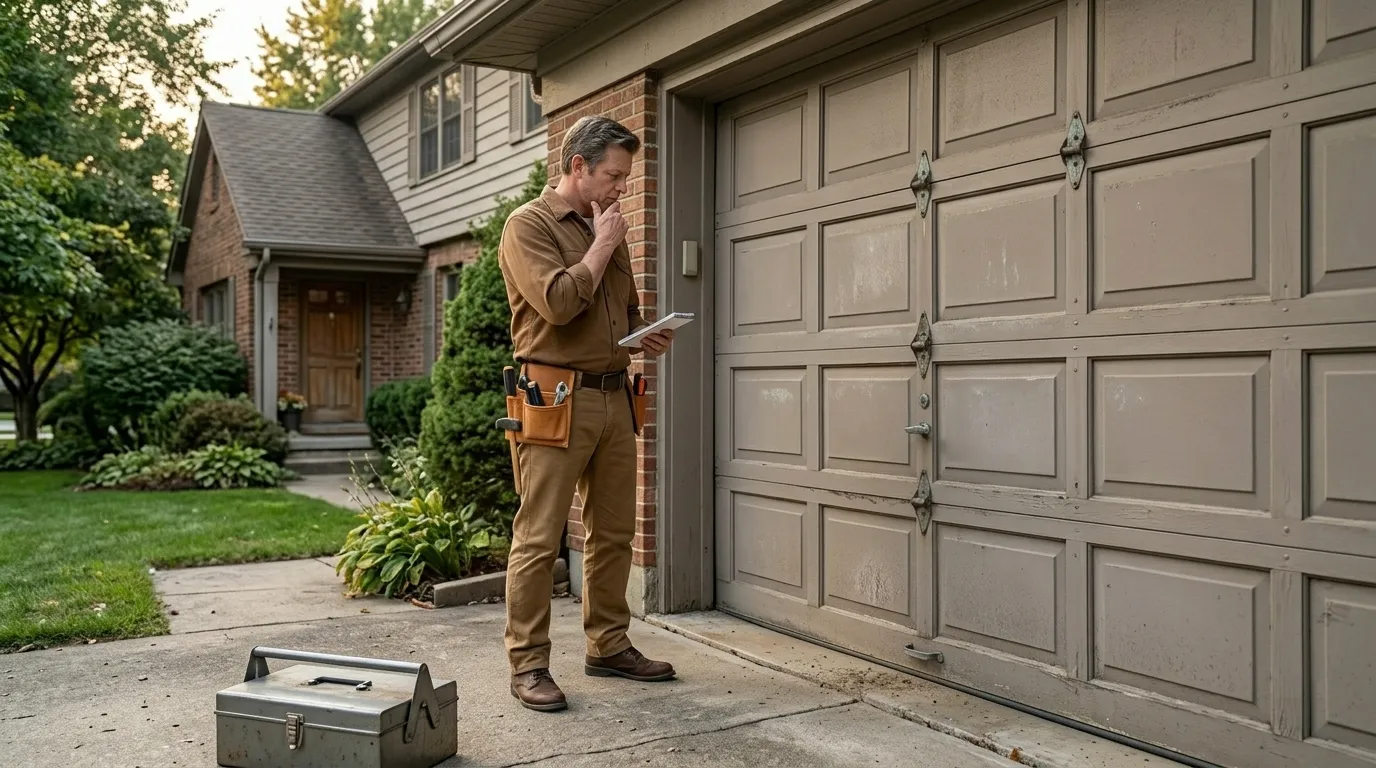
A typical call here is one of three things: a broken torsion spring, a worn-out opener, or a track that's bent enough to bind the rollers. We start by cycling the door by hand with the opener disconnected - that tells us in about thirty seconds whether the spring is doing its job. If it's the spring, we measure wire size, coil length, and drum size off the old one rather than guessing, because a spring wound wrong for the door's weight either won't lift it or will burn out the opener trying.
Opener repair is different work. Most of what fails isn't the motor - it's the logic board, the drive gear, or safety sensors that have drifted out of alignment. We check the sensors first since a door that reverses or won't close at all is usually a $20 part, not a $400 one, though you won't know which until someone looks.
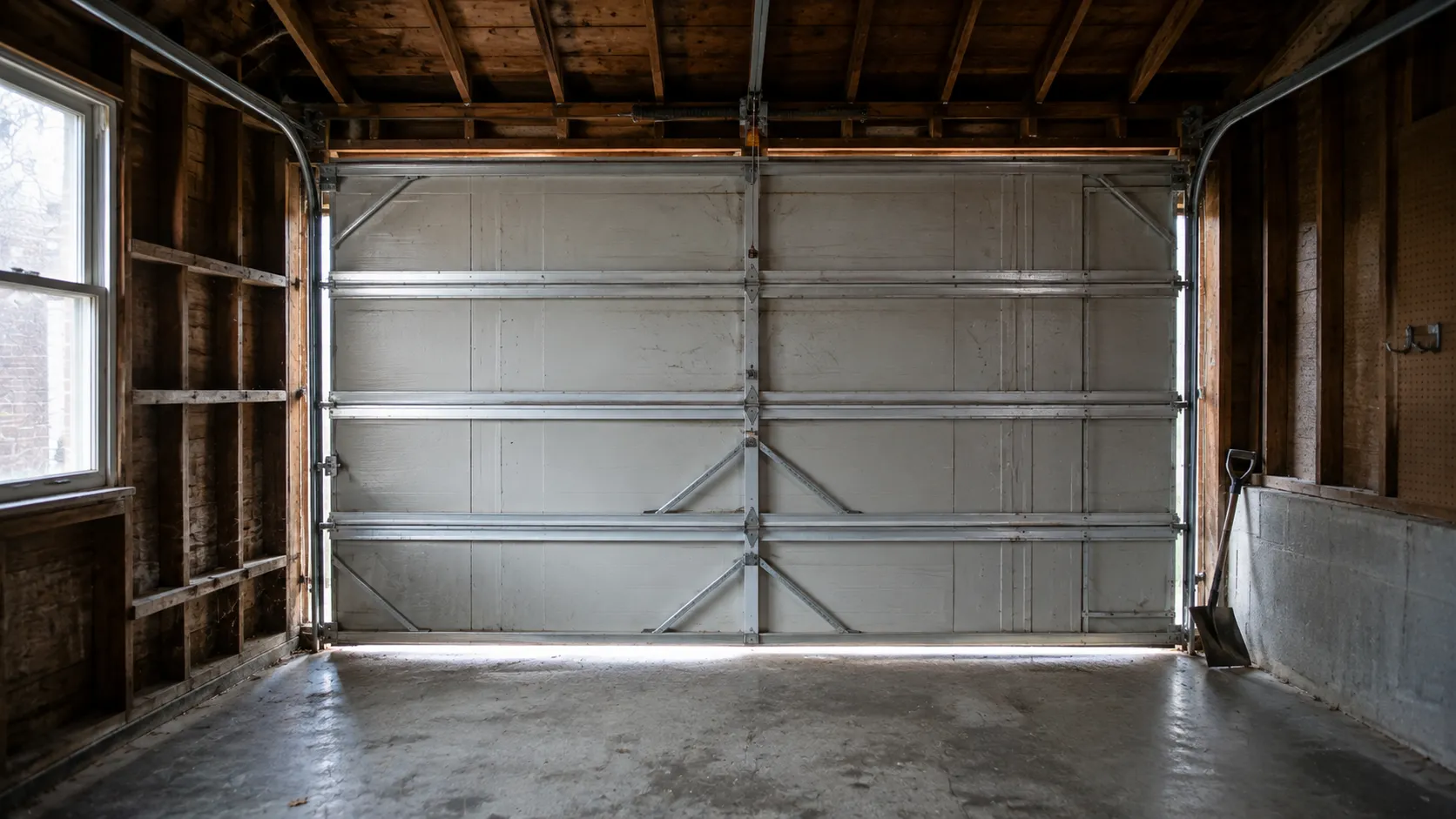
Track and roller work is the slower job. Bent track has to come off, get straightened or replaced section by section, and rollers get swapped while it's open anyway since they're already exposed. We don't force a bent track back into shape and call it fixed - if it's kinked at a bracket, that bracket gets replaced, because a track that's merely 'close enough' will bind again within months.
The area
The Cost of This Job
We're not going to put a number here that doesn't hold up once we're standing in your driveway looking at the actual door. Spring replacement, opener repair, and track work price out differently depending on spring size, whether it's a single door or a double, and whether the opener is old enough that parts have to be sourced rather than pulled off a truck shelf.
What we can tell you: this area's household income runs a median of $101,138, and across the roughly 473,550 households and 187,832 owner-occupied houses in the wider service area, we see a real mix - some homeowners want the cheapest steel panel that gets the door closing again, others want a heavier-gauge door and a quieter belt-drive opener. Both are legitimate calls, and the price gap between them is real.
One honest limit: if your opener is old enough that the manufacturer's stopped making the logic board, we're not going to hunt down a discontinued part indefinitely. At some point a full opener swap costs less than the labor to chase a part that may not exist anymore, and we'll tell you when we hit that point instead of running up a bill.
What we find
The Symptom
The call we get most from this side of the county is a door that either won't open at all or opens partway and stops. Nine times out of ten with a door that won't budge, it's a broken torsion spring - you'll usually hear it happen, a loud bang from the garage, often overnight when the temperature swing is at its widest for the day.
The partial-open, stop-and-reverse pattern is almost always the opener's safety sensors, either knocked out of alignment or just dirty enough that the beam reads as blocked. That one's a five-minute fix if that's really what it is, but we still check the cables and rollers while we're there, because a fraying cable can mimic the same symptom right up until it snaps.
A noisier, grinding sound during operation usually means a roller that's worn oval instead of round, or a track bracket that's worked loose from the framing. None of these are dramatic failures - they're wear failures, the kind that show up on a schedule tied to how old the door and hardware actually are, not how hard anyone's been using them lately.
How we work
Why It Happens Here
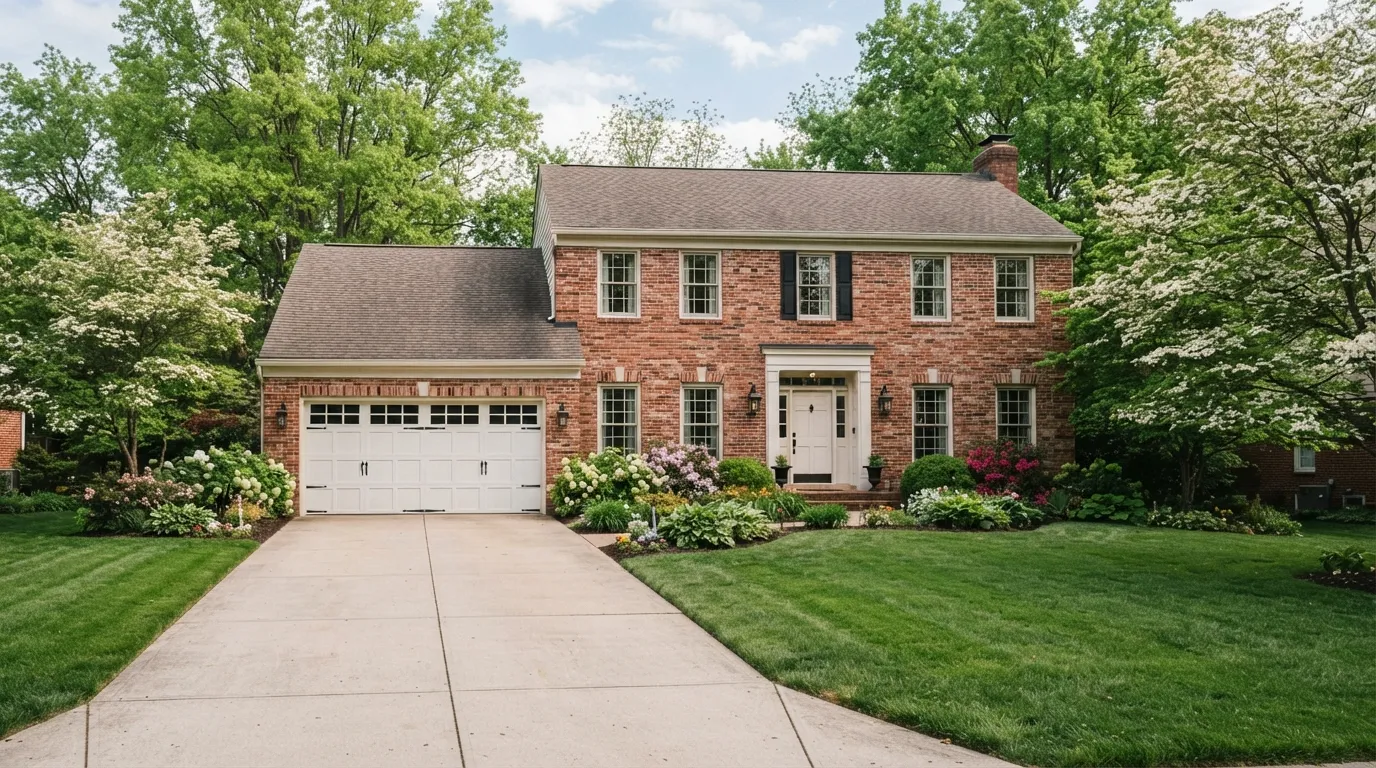
Housing in this part of the county mostly went up between 1953 and 1995, with the median build year landing around 1968, and the surrounding mix of 37 named areas leans heavily toward that same 1960s-70s construction wave. That matters for one specific reason: a lot of these garages still have the original torsion spring and hardware, or a direct like-for-like replacement installed decades ago, and springs are rated in cycles - typically somewhere in the 7,000 to 10,000 range - not years. A door built when Johnson was president has had a lot of cycles.
The climate here runs mild temperate, which is a mixed blessing for a garage door. You don't get the freeze-thaw cracking that kills hardware in colder climates, but you also don't get a hard winter that forces anyone to think about maintenance on a schedule - doors here just get used until something breaks, with no seasonal trigger to check them first.
Geography plays a role too. Oak View sits about a mile northeast and Sunset Beach roughly four miles west-northwest, both part of the same mid-century building wave, so it's common to get calls from one street right after a neighboring one - same age hardware, same failure, different week.
Questions
Common questions
How do I know if it's the spring or the opener?
Disconnect the opener (pull the red emergency release cord) and try lifting the door by hand. If it's very heavy, hard to lift past waist height, or won't stay open on its own, that's a spring problem. If it lifts easily and stays put, the trouble is in the opener or its sensors, not the springs.
Can I replace a torsion spring myself?
We wouldn't recommend it. A wound torsion spring under a garage door is under enough tension to cause serious injury if it slips while you're working on it, and getting the wire size and wind direction wrong means the door won't operate correctly even if you get it on safely.
Why did my opener sensors suddenly stop working?
Usually it's alignment or dirt, not the sensor itself failing. If a shelf, storage box, or even a spider web has drifted into the beam path, or one bracket's been bumped, the opener reads it as an obstruction and refuses to close. Wipe both lenses and check they're pointed straight at each other first.
Is it worth repairing an old opener or should I replace it?
Depends on the failure. Sensor or gear issues are usually worth fixing. If the logic board is dead and the model's old enough that parts are hard to source, a full replacement often ends up cheaper than the labor spent chasing discontinued parts - we'll tell you straight if that's where your unit stands.
Ready when you are
Need a garage door sorted in Huntington Beach?
Huntington Beach Garage Door Pros repairs and installs garage doors, springs and openers in Huntington Beach, CA and the surrounding area.