
Guide
What Actually Matters When You Replace a Door Here
Replacing a garage door in Huntington Beach means matching 1960s-era openings and mild coastal air, not just picking a style off a hardware-store shelf.
Local detail
Doing Nothing For Now
Not every door on a 1968-median house needs to come out. If the track is straight, the springs are balanced, and the panels aren't cracked or delaminating, a tune-up costs less than a replacement and buys you real years. We'll say this even though it costs us the job: a door that runs quiet and closes square doesn't need swapping just because it's old. What does push a door into replacement territory is rot in the bottom panel from years of moisture, a torsion spring that's been re-wound past its safe life, or an opening so far out of square that every repair is a patch on a patch.
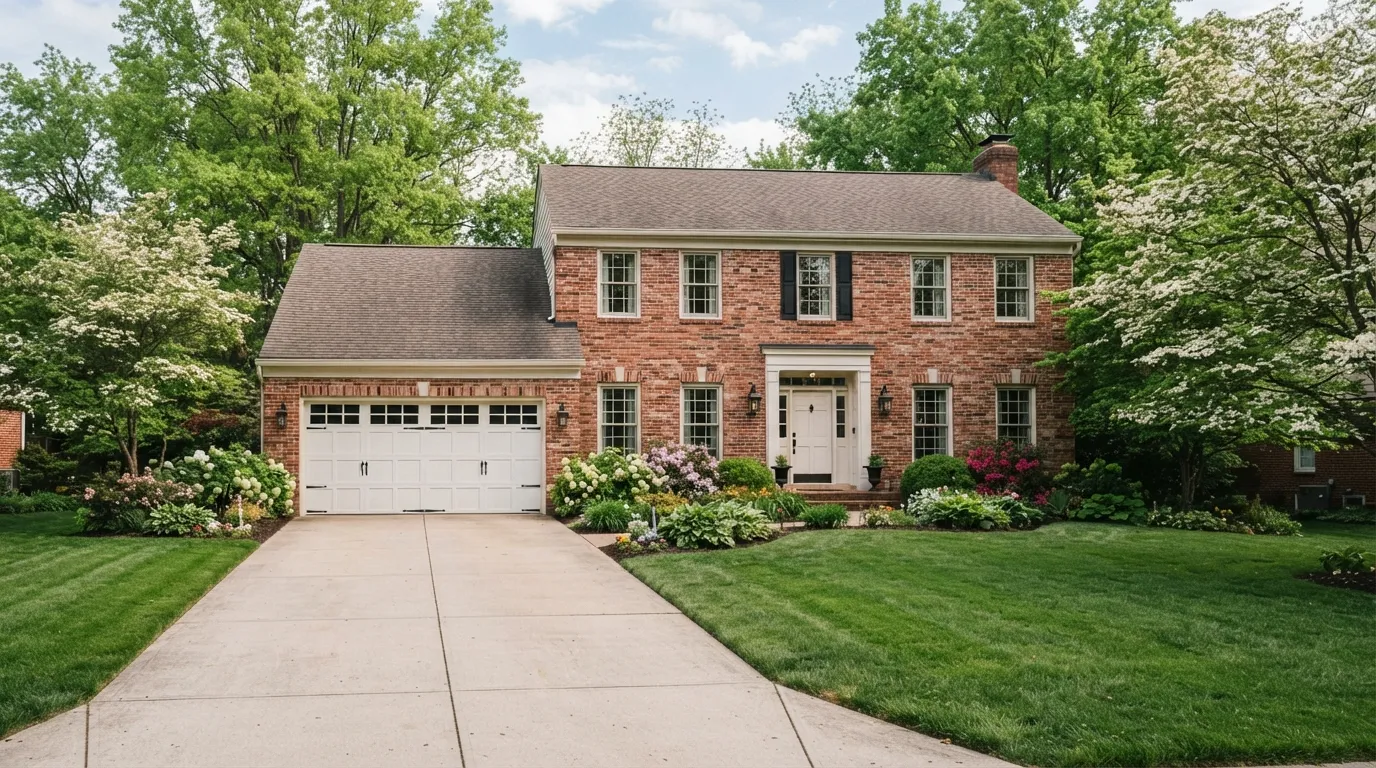
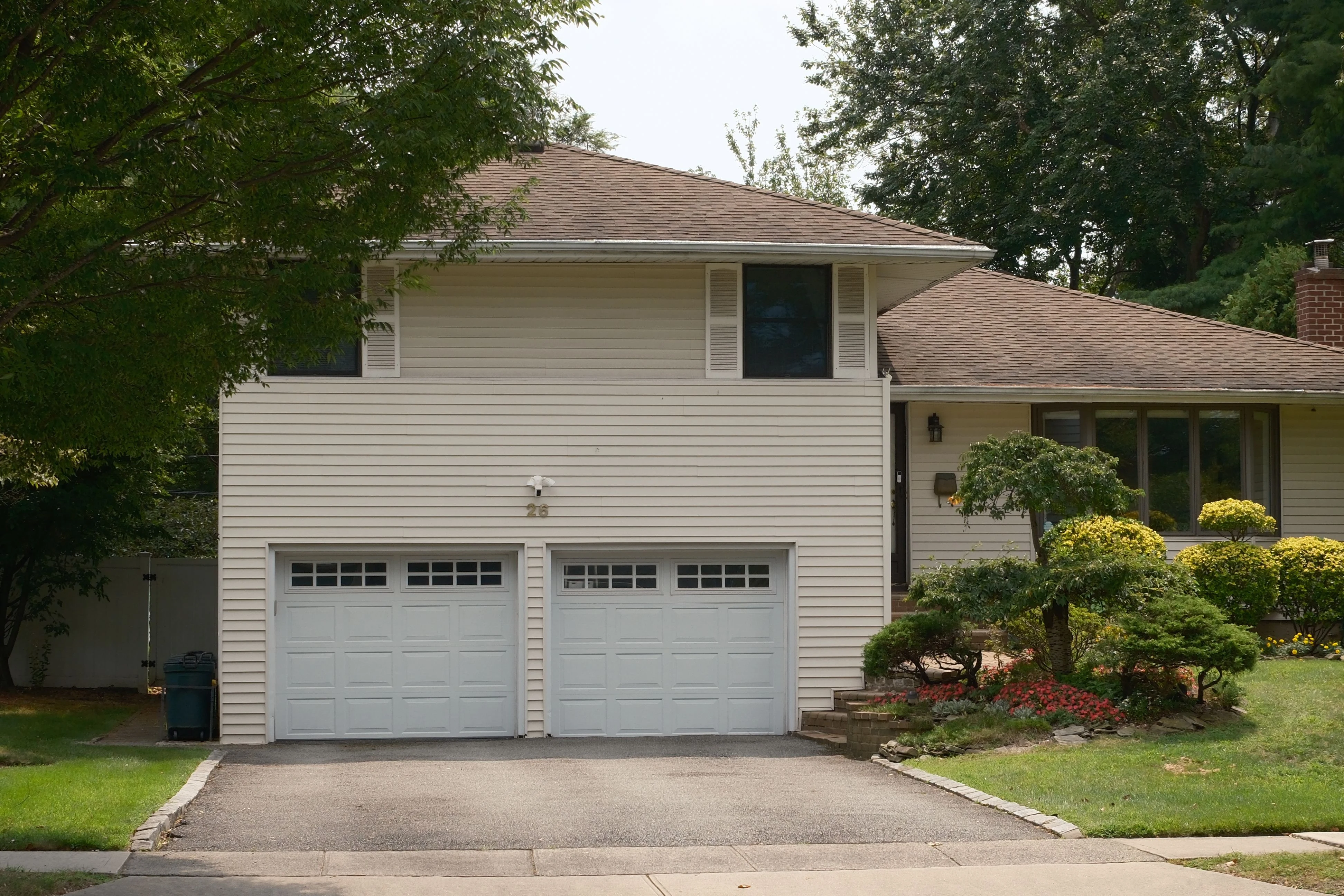
If your house dates to the 1953-1995 building run that covers most of this area, check the obvious things first - daylight around the edges, a door that drags on one side, hinges pulling loose from soft wood. None of that means buy new today. It means you're closer to needing it than a house built with modern jamb hardware, and you should budget for it rather than get surprised by it.
The area
What to Look At First
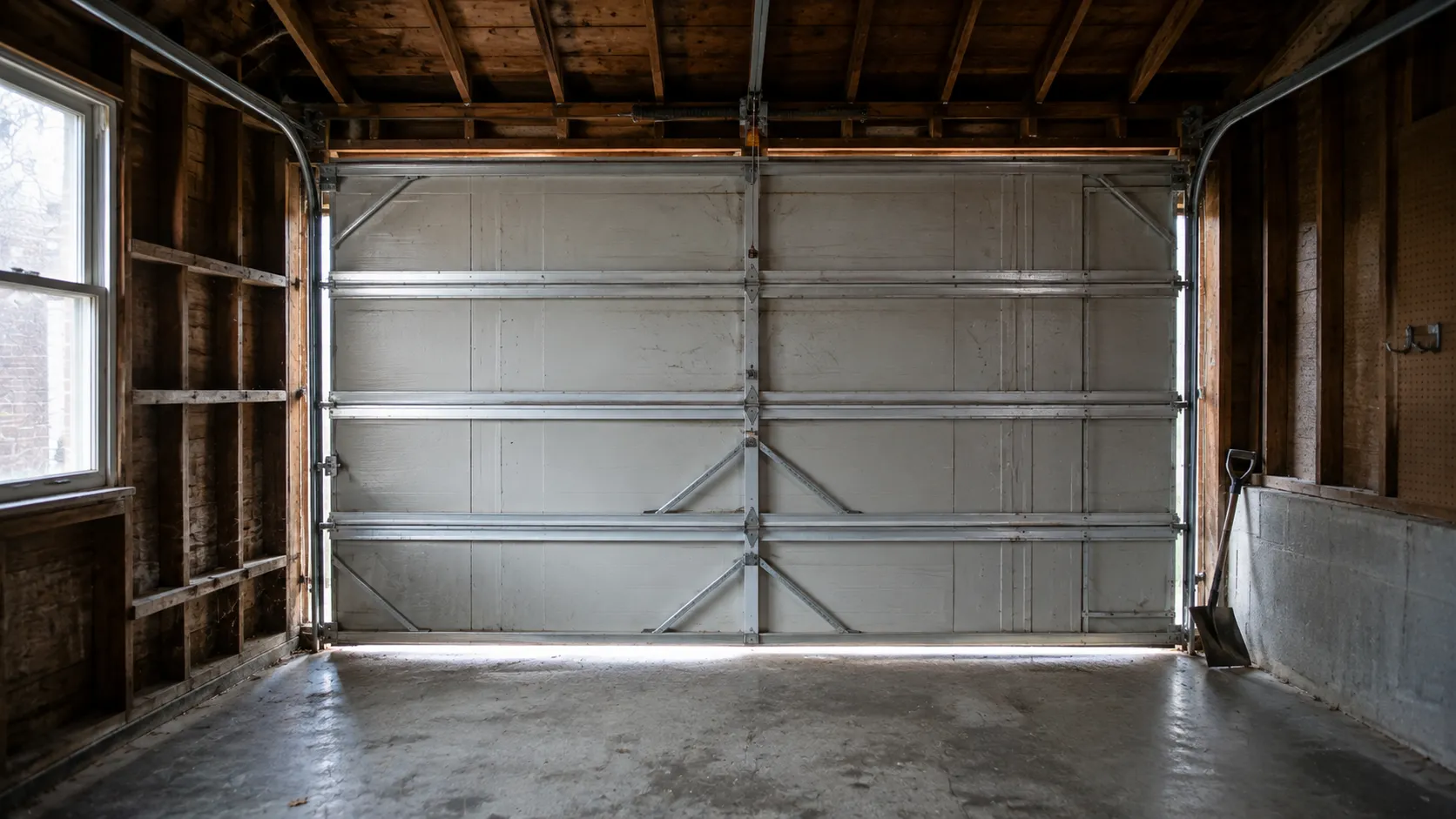
Start with the rough opening, not the catalog. Houses across this stretch were mostly framed in the 1960s and 70s, and the openings from that era run narrower and shorter than what a lot of current stock sectional doors assume. Before you fall in love with a style online, measure your header height and the width between jamb studs - an opening built for a single-panel door from the 1960s often needs jamb extensions or a header kit to take a modern sectional track.
Next, look at what's actually holding the old door up. Side-mounted torsion springs and older extension-spring setups were common in this housing stock, and if a company quotes you a door price without pricing the hardware conversion, ask why. Track type matters too: low-headroom track exists for a reason, and if your garage ceiling sits close to the door track, standard track won't clear it.
None of this is exotic. It's just what comes with buying a door for a house that was built decades before the door industry standardized its openings.
What we find
How Local Conditions Play In
This is a mild temperate climate, and that changes the calculus on what you're paying extra for. In places that swing hard between summer heat and winter cold, an insulated door earns its price fast - it's holding back real temperature load on the garage and whatever's behind it. Here, you're not fighting that swing, so a heavily insulated door is more about noise and a little temperature buffering than it is a necessity. That doesn't mean skip insulation entirely; it means don't let a salesperson price you into the top-tier foam-core door on the promise that it'll cut your energy bill the way it would somewhere with real winters.
Where the climate does matter is wear on moving parts - steady moderate temperatures mean less expansion and contraction stress on track and rollers than a door sees in a place with sharp seasonal swings, so a properly installed door here should hold its adjustment longer between service calls. Spend the insulation premium if you use the garage as a workspace or want the quieter close. Don't spend it chasing an energy problem this climate mostly doesn't hand you.
How we work
The Problem
The real friction is between what standard doors assume and what a 1968-median house actually has. Across the 37 named areas that make up this part of the housing stock, the doors and openings we get called to replace most are still running original 1960s and 70s dimensions, and a lot of off-the-shelf doors are sized for a different era's framing. That means custom trim, a jamb rebuild, or a header kit adds real cost on top of the door itself - cost that a generic online quote won't show you.
The median household income across this service area sits at $101,138, which puts a properly fitted custom door within reach for most owners here, but it also means the gap between a cheap door that doesn't fit right and one that does is a real decision, not a rounding error. With 187,832 owner-occupied houses out of 473,550 households in this area, a lot of driveways are carrying the same mismatch. The honest fix is measuring the opening before you shop for style, because the wrong-sized door installed fast is the job we get called back for.
Questions
Common questions
Do I need an insulated door in Huntington Beach?
Not for the climate alone. This is a mild temperate area without the sharp seasonal swings that make insulation pay for itself in energy savings elsewhere. Get one if you want a quieter close or use the garage as a workspace, but don't pay a premium expecting it to solve a heating or cooling problem this climate doesn't really create.
Why doesn't a standard door fit my opening?
Most houses in this area were framed between 1953 and 1995, with the median around 1968, well before door manufacturers standardized opening sizes. A modern sectional door often needs a jamb extension or header kit to fit an opening built for an older single-panel or extension-spring setup. Measure the rough opening before you pick a style.
Is it worth repairing an old door instead of replacing it?
Often, yes. If the track runs straight, the springs are balanced, and the panels aren't rotted or cracked, a repair is cheaper and can add real years to a door from this era's housing stock. Replace when the framing is out of square, the spring hardware is unsafe, or repairs are piling on top of repairs.
Ready when you are
Need a garage door sorted in Huntington Beach?
Huntington Beach Garage Door Pros repairs and installs garage doors, springs and openers in Huntington Beach, CA and the surrounding area.